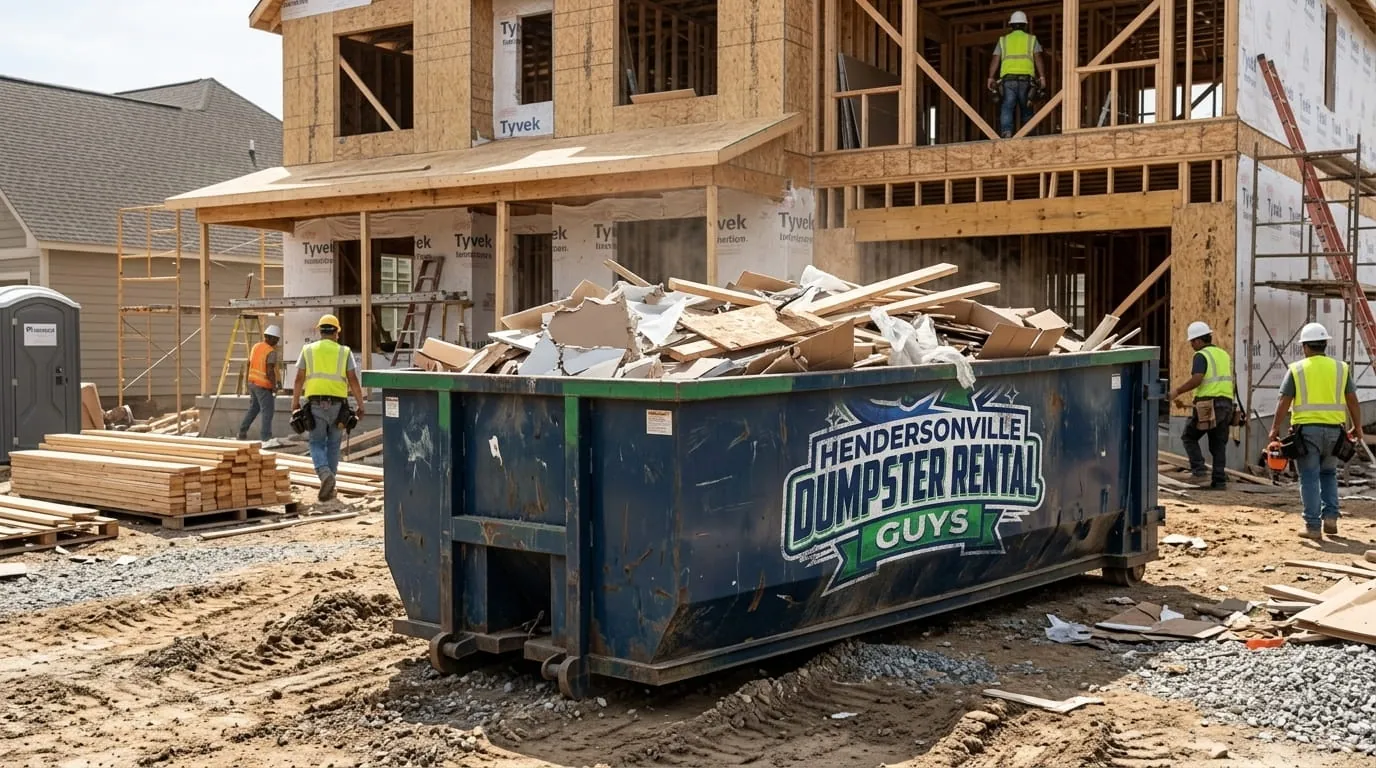
I have been dropping roll-off boxes on Middle Tennessee roofing jobs for a long time, and if there is one project that trips up homeowners more than any other, it is a tear-off. People call me ready to rent the same size can they would grab for a garage cleanout or a kitchen remodel, and then they are shocked when I steer them toward a smaller bin. Roofing debris is its own animal. It is dense, it is heavy, and the math works nothing like a pile of cardboard and old furniture. This guide walks you through how to size a dumpster for a roof tear-off around Hendersonville and Sumner County, how to run the weight numbers before the first shingle comes off, and how to keep your driveway and your wallet intact.
Why Roofing Debris Breaks the Normal Dumpster Rules
When you fill a dumpster with household junk, construction framing, or yard waste, you usually run out of room long before you run out of weight. A 20-yard box packed with couches and drywall offcuts might only weigh two or three tons. Shingles are the opposite. A tear-off can top out on weight when the box is barely half full of volume. That is the single most important thing to understand before you book a bin: on a roofing job, tonnage is the limiting factor, not cubic yards.
Asphalt shingles are petroleum, fiberglass or organic mat, and a heavy mineral granule coating, all compressed into layers. Add the felt or synthetic underlayment, the drip edge, the old flashing, a dumpster's worth of nails, and any rotten decking the crew pulls, and you are loading some of the heaviest material we ever haul. This is exactly why the industry uses dedicated roofing boxes and why a smaller can is almost always the right call. A smaller footprint keeps you from overloading, keeps the truck legal on the road, and keeps you clear of the overage fees that turn a clean job into a billing argument.
The Shingle Weight Math: Bundles, Squares, and Tons
Roofers measure roofs in "squares." One square equals 100 square feet of roof surface. Shingles are sold in bundles, and it takes three bundles to cover one square for standard products. So the first number you need is how many squares are on your roof, and from there the weight follows a predictable formula.
3-Tab Versus Architectural
The two common shingle types weigh differently, and it matters a lot when you are estimating:
- 3-tab shingles: roughly 200 to 250 pounds per square. A bundle runs about 65 to 80 pounds. These are the older, flatter, single-pattern shingles you still see on a lot of homes near downtown Hendersonville and the older lakeside streets around Old Hickory Lake.
- Architectural (dimensional) shingles: roughly 300 to 400 pounds per square, with bundles around 70 to 90 pounds but more bundles per square on heavier premium lines. These are standard on the newer subdivisions going up all over Sumner County.
Here is the key move most homeowners miss: the debris you haul away weighs more than the new shingles going on, because you are also tearing off the old underlayment, embedded moisture, dirt, granule loss debris, and sometimes a second or third layer. A safe planning rule is to estimate debris at the full installed weight of what is up there, then add a cushion.
| Roof Size | 3-Tab (1 layer) | Architectural (1 layer) | Suggested Bin |
|---|---|---|---|
| 10 squares (1,000 sq ft) | ~1.0 to 1.25 tons | ~1.5 to 2.0 tons | 10 yard |
| 15 squares (1,500 sq ft) | ~1.5 to 1.9 tons | ~2.25 to 3.0 tons | 10 to 15 yard |
| 20 squares (2,000 sq ft) | ~2.0 to 2.5 tons | ~3.0 to 4.0 tons | 15 yard |
| 30 squares (3,000 sq ft) | ~3.0 to 3.75 tons | ~4.5 to 6.0 tons | Two pulls or a dedicated roofing box |
Those numbers are for a single layer. Double them, or close to it, if you have two layers, and triple for three. A 20-square ranch with two layers of architectural shingle can easily produce six to eight tons of debris. That is why I size by weight first and volume second.
Estimating Your Squares Before You Call
You do not need to climb up with a tape measure. A couple of easy ways to get close:
- Count the bundles from the last job if you have the receipt, or ask your roofer how many squares they quoted. Divide bundles by three for a rough square count.
- Measure your home's footprint and multiply by a pitch factor. A simple gable roof on a 1,200 sq ft single-story home is usually around 13 to 16 squares once you account for slope and overhangs.
- Ask your contractor for the measurement report. Most roofers around Hendersonville pull satellite measurement reports now, and that number is gold for sizing a bin accurately.
Once you have squares and shingle type, run the table above. When you land between two sizes, tell us the number and we will help you pick. If you want a general primer on matching a project to a container, our guide on what size dumpster you need walks through the broader logic, but roofing is the one job where I always lean smaller.
Single Layer, Multiple Layers, and the Hendersonville Housing Mix
Tennessee code and most modern practice allow a maximum of two layers of asphalt shingle before a full tear-off to the deck is required. That means a lot of older homes around here are sitting on two layers right now, and when they finally get stripped, the debris weight roughly doubles. The established neighborhoods near downtown Hendersonville and the lake communities that have been around for decades are prime candidates for multi-layer tear-offs. If your home is older and has never been fully stripped, plan for the heavier end of every estimate.
The fast-growing subdivisions out toward Station Camp, Gallatin, and the newer developments are usually single-layer architectural, which makes them easier to estimate but still heavy because dimensional shingles weigh more per square. Either way, the recommendation is the same: a smaller, dedicated roofing bin. Our roofing dumpster rental service is set up specifically for this material and the weight limits that come with it.
Nails, Underlayment, and the Stuff Nobody Weighs
A tear-off is not just shingles. Every square foot of roof is holding felt or synthetic underlayment, and a standard tear-off pulls it all. Add old flashing, drip edge, ridge vent, pipe boots, and the thousands of roofing nails that come out with the shingles. None of it weighs much by itself, but it adds up, and the nails create the biggest headache on the ground. More on protecting your property below, but factor underlayment into your weight cushion. If the crew finds soft or rotten decking and has to replace sheathing, that plywood or OSB goes in the box too and adds real tonnage fast.
Driveway and Street Protection During a Tear-Off
Roofing jobs are messy by nature. Shingles slide, tear-off chunks miss the box, and nails rain down. Protecting whatever the dumpster sits on is not optional, it is just good sense. Here is what I tell every customer:
- Lay down plywood or OSB under the dumpster wheels and tongue. A loaded roofing box is heavy, and the steel wheels can mark or crack an asphalt or concrete drive, especially in summer heat when asphalt softens.
- Put a tarp between the house and the bin to catch sliding debris and make magnet cleanup easier.
- Run a magnet sweep daily and at job's end. Roofing nails and flat tires go together. A rolling magnet over the drive, walkways, and grass is cheap insurance.
- Keep the box close to the tear-off zone so crews are not carrying loads across the whole yard, which is where spillage happens.
We go deeper on this in our write-up on how to protect your driveway during a dumpster rental, and it is worth a read before the crew shows up.
Placement on Middle Tennessee Lots
Where the box goes matters. On the newer Sumner County subdivisions, driveways are often the only hard surface with clearance, and HOA rules may limit how long a bin can sit or whether it can go in the street. On the older lakeside and downtown lots, you may have mature trees, tighter driveways, and overhead limbs that keep our truck from lifting the box clean. When you book, tell us about low branches, gates, slopes, and septic fields. We need roughly 60 feet of straight clearance and overhead room to drop and pick up safely. A 10 or 15-yard box is a lot easier to place on a tight Middle-TN lot than a big 30-yard can, which is one more reason the smaller roofing bin wins.
The Tennessee Weather Angle: Why Re-Roofs Spike Here
If you are tearing off a roof around Hendersonville, odds are the weather had something to do with it. Middle Tennessee sits in a corridor that takes a beating. Spring and summer bring frequent severe thunderstorms, large hail, and straight-line winds, and this region sees its share of tornado activity. Hail alone drives a huge volume of insurance re-roofs across Sumner County every year, bruising and cracking shingles even when the roof looks fine from the ground. Our long, hot, humid summers cook asphalt shingles and accelerate granule loss, so roofs here simply do not last as long as they would in a milder climate. Then the occasional winter ice storm adds freeze-thaw stress and the weight of ice pulling at aging shingles and flashing.
What that means practically: a lot of the tear-offs we service are insurance jobs on a clock, and a lot of them are older roofs that have quietly aged past their prime in the heat. Either way, having the right-sized bin staged quickly keeps the project moving. If the whole roof is coming off as part of a storm claim, size for the full tear-off weight, not just the visible damage, because the crew is almost always going to the deck.
Avoiding Overage Fees
Overage fees are the number one surprise on roofing rentals, and they are completely avoidable. Every roll-off comes with an included tonnage allowance, and anything over that gets billed by the ton. Because shingles are so dense, it is easy to blow past the limit if you oversize the volume and then fill it. The fix is counterintuitive but correct: rent the right smaller box and know your weight. A 10-yard dumpster is the workhorse for most single-layer tear-offs up to about 15 squares, and a 15-yard dumpster handles larger single-layer jobs or smaller multi-layer tear-offs. For big or multi-layer roofs, two scheduled pulls of a smaller box often come in cheaper and safer than one overloaded large can that the truck cannot legally haul.
A few habits that keep you under the limit:
- Give us an honest square count and layer count up front so we match the right bin and tonnage allowance.
- Do not mix in other heavy debris like concrete, dirt, or brick with roofing unless we have cleared it, because that stacks weight fast.
- Load evenly and keep debris below the fill line so the box is legal and safe to transport.
- If the crew uncovers extensive decking rot, call us before you keep piling, because that sheathing changes the weight picture.
Book the Right Box the First Time
Sizing a roofing dumpster is not guesswork once you know your squares, your shingle type, and your layer count. Run the weight, lean toward the smaller dedicated bin, protect the driveway, and you will sail through the tear-off without a billing surprise. If you want a hand running the numbers for your specific roof, that is exactly what we do all day. Call Hendersonville Dumpster Rental Guys at (629) 300-5056 or reach us through our contact page, and we will get the right box staged on your Sumner County job and keep your tear-off on schedule.
Owner, Hendersonville Dumpster Rental Guys — sharing straight advice from years of local hauling across Hendersonville and Sumner County.
Frequently Asked Questions
What size dumpster do I need for a roof tear-off in Hendersonville?
For most single-layer tear-offs up to about 15 squares, a 10-yard roofing bin is the right call, and a 15-yard handles larger single-layer jobs or smaller multi-layer roofs. Roofing debris is heavy, so we size by weight first. Give us your square count, shingle type, and number of layers and we will match the bin and tonnage allowance.
Why do you recommend a smaller dumpster for roofing instead of a big one?
Shingles are extremely dense, so a roofing load hits its weight limit long before the box is full of volume. A smaller dedicated bin keeps you from overloading, keeps the truck legal to haul, and keeps you clear of overage fees. A large can filled with shingles often cannot legally leave your driveway.
How much does a roof tear-off weigh?
Figure roughly 1 to 1.25 tons per 10 squares of 3-tab shingle and 1.5 to 2 tons per 10 squares of architectural shingle for a single layer, then add for underlayment, nails, and any rotten decking. Double it for two layers. A 20-square two-layer architectural roof can easily produce six to eight tons.
How do I protect my driveway during a roofing dumpster rental?
Lay plywood or OSB under the dumpster wheels and tongue to protect asphalt or concrete, hang a tarp between the house and bin to catch sliding debris, keep the box close to the tear-off zone, and run a rolling magnet daily to pick up nails. Our driveway protection guide covers the full routine.
Why are so many roofs replaced around Sumner County?
Middle Tennessee takes frequent severe spring and summer thunderstorms, large hail, straight-line winds, and tornado activity, which drives a high volume of insurance re-roofs. Hot, humid summers also age shingles fast, and occasional winter ice storms add stress. Most of our tear-offs are storm or insurance jobs going all the way to the deck.