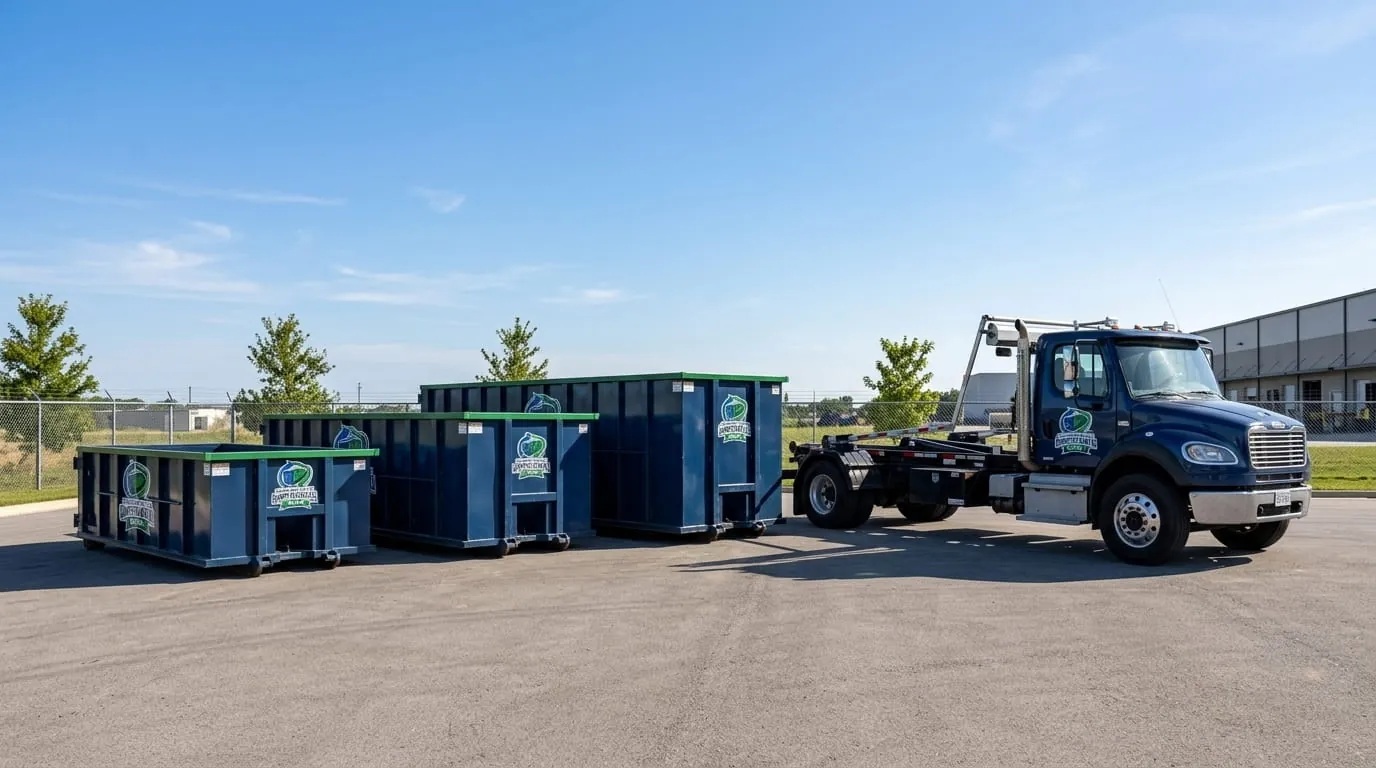
A roll-off dumpster is the most useful tool on any cleanout or remodel project, but it is also one of the heaviest objects that will ever sit on your property. An empty 20-yard container can weigh 4,000 to 6,000 pounds before you throw in a single scrap, and once it is loaded with roofing shingles, concrete, or soggy demolition debris, the whole package can push well past 10,000 pounds concentrated on four small steel contact points. That weight, parked in one spot for a week in the Hendersonville heat or during a stretch of spring storms, is exactly what marks, dents, and sometimes cracks a driveway. The good news is that almost every bit of driveway damage is preventable with a little preparation and a hauler who knows what they are doing. This guide walks through why driveways get damaged, how to protect concrete, asphalt, and gravel, and what a careful crew does automatically before the truck ever backs in.
Why Roll-Off Dumpsters Can Mark or Crack a Driveway
The problem is not really the total weight of the container, it is how that weight is delivered and where it lands. Three things do the damage.
- Point loading. A roll-off sits on a handful of small steel feet, rails, and sometimes the rear wheels. All of the container weight funnels through those few square inches of contact, so the pressure per square inch is enormous even though the dumpster looks like it is just resting there.
- Dragging and rolling during delivery and pickup. The container is winched off the truck bed and rolls back on steel wheels. If those wheels or the trailing edge of the box drag across the surface, they can gouge sealant, scrape finish concrete, or scar soft asphalt. The same thing happens in reverse at pickup.
- Heat and moisture working on the surface. Middle Tennessee summers are hot and humid, and asphalt softens as it heats up. Spring brings heavy rain that saturates the ground under and around a driveway. A surface that would shrug off the weight in mild, dry conditions can give way when it is soft, hot, or sitting on waterlogged soil.
Understanding those three forces tells you exactly what the protection is for: spread the load out, keep the steel from dragging, and respect the condition of the surface and the ground beneath it.
Boards and Plywood: The Single Most Important Step
If you remember one thing from this article, remember this: put something between the dumpster and your driveway. The standard, proven method is to lay down lumber under the container's contact points. There are two common approaches, and a good hauler uses one or both.
- Planks or 2x10 / 2x12 boards placed where the rails and wheels will rest. These take the point load and spread it across a much wider footprint so no single spot on your concrete or asphalt absorbs the full pressure.
- Sheets of 3/4-inch plywood or OSB laid down as a landing pad under the whole rear of the container. Plywood is especially helpful on newer concrete, on sealed or stamped surfaces, and on asphalt during hot weather.
The boards do two jobs at once. They distribute weight so you never get a concentrated dent or crack, and they give the steel wheels a clean surface to roll on so nothing drags across your actual driveway. Even a simple set of planks under the back wheels makes a dramatic difference. This is cheap insurance, and it is the step DIY renters most often skip.
Weight Distribution Inside the Dumpster
Protection is not only about what goes under the container, it is also about how you load it. Dump heavy material like concrete, brick, dirt, and shingles evenly across the floor rather than piling it all at one end. A lopsided load concentrates weight on fewer contact points and makes the box harder and rougher to roll at pickup. Keep heavy debris low and spread flat, then add lighter, bulkier material on top. If you are not sure which container keeps weight manageable for a dense load, our guide on what size dumpster do I need walks through matching the box to the material.
Protecting a Concrete Driveway
Hendersonville's newer subdivisions off Saundersville Road, Drakes Creek, and the growing neighborhoods around the city are full of fresh concrete driveways, and homeowners are rightly protective of them. Concrete is strong in compression, so a properly bedded dumpster rarely cracks good concrete outright. The real risks on concrete are surface scratches from dragging steel, and small spider cracks or chips if the slab is young, thin, or poured over poorly compacted fill.
- Insist on boards or plywood under every contact point. Finish concrete scratches easily and the marks are permanent.
- Be cautious with concrete poured in the last six to twelve months. Fresh concrete keeps curing and gaining strength for weeks. If your driveway is brand new, mention it when you book so placement can be adjusted.
- Watch the edges. The unsupported edge of a slab is weaker than the middle. A good driver centers the container on the slab rather than letting a wheel ride the edge or the transition to the apron.
- Keep it off decorative or stamped concrete if at all possible. Those surfaces are expensive to repair and almost always better served by a plywood landing pad or placement on a plainer section.
Protecting an Asphalt Driveway in the Tennessee Heat
Asphalt is where Hendersonville's climate really matters. Asphalt is a flexible pavement held together by bituminous binder, and that binder softens as temperatures climb. On a humid July or August afternoon, a dark asphalt driveway can easily reach surface temperatures far above the air temperature, and soft asphalt will take the imprint of a heavy steel foot like a boot in warm clay. Those dents and depressions do not pop back out.
- Always use wide boards or plywood on asphalt and use more of it than you would on concrete. Spreading the load over a large footprint is the only reliable way to keep a hot surface from indenting.
- Schedule deliveries and keep the rental short in peak summer. The longer a loaded container sits on hot asphalt, the more time the surface has to deform. A tighter rental window reduces the exposure.
- Try to avoid the hottest, newest asphalt. Asphalt sealed or laid within the last year is the most vulnerable. If your driveway was just done, consider a gravel staging area or the street instead.
- Winter is not entirely off the hook. Middle Tennessee gets occasional hard freezes and freeze-thaw cycles. Water that seeps into small cracks and then freezes can widen them, and ice under a container is a slipping and shifting hazard during pickup. A dry, cleared landing area matters in January too.
Gravel and Long Rural Driveways in Sumner County
A lot of Sumner County homes, especially out toward Bethpage, Castalian Springs, and the countryside beyond Hendersonville proper, sit at the end of long gravel or chip-and-seal driveways. Gravel is forgiving in one sense because it will not crack, but it brings its own challenges.
- Ruts and displacement. Heavy wheels push gravel aside and dig in, leaving ruts and bare spots. Placing boards or a plywood pad under the contact points keeps the container from sinking and makes it far easier to roll the loaded box back onto the truck.
- Grade and firmness. A gravel drive over soft, undrained subsoil can let a container tilt or sink, especially after rain. A firm, well-drained section near the top of the drive is usually the best spot.
- Clearance on long drives. Narrow country drives lined with trees, mailboxes, or fences need room for a 30-foot-plus truck to maneuver and to raise the bed at an angle. Clearing overhanging branches and giving the driver a heads-up about tight spots prevents trouble.
If your property is a classic long gravel drive, talk through placement when you book. Our residential dumpster rental crews deal with rural Sumner County driveways constantly and can usually find a spot that protects both the surface and your landscaping.
Soft, Saturated Ground After Middle-Tennessee Rain
Spring storms roll through Hendersonville and the whole Cumberland region hard, and the ground stays saturated for days afterward. Saturated soil under a driveway, especially the edges, the apron, and any unpaved staging area, loses its ability to support concentrated weight. That is when you see edge slabs crack, asphalt depress, and gravel drives rut deeply.
- Wait for the ground to drain before placing a container on soil, grass, or the soft edge of a drive if you can time the project around the weather.
- Use a larger plywood pad to float the load over soft ground, the same way a crane uses outrigger pads.
- Keep the container off lawn and garden beds after heavy rain. Even if it does not crack anything, it will leave deep ruts and kill the grass underneath.
Steep Lakeside and Hillside Driveways
Living near Old Hickory Lake is one of the best parts of the Hendersonville area, and it comes with steep, sloped driveways cut into the hillsides above the water. A sloped driveway changes the safety math entirely. A roll-off must sit reasonably level so it does not roll, shift, or load unevenly, and the truck needs a safe angle to winch the container off and back on.
- Find the flattest available landing. Often the best spot on a lakeside lot is a level pad near the top of the drive or a parking apron rather than the slope itself.
- Chocking and wheel blocks are a must on any grade, and a careful driver sets them without being asked.
- Loading uphill is safer than loading downhill for the truck, so placement and truck direction matter more on a slope than on flat ground.
- If the grade is too steep, a smaller container like a 10-yard dumpster can sometimes fit and sit safely where a larger box cannot.
Backing In and Loading Care
Most driveway damage that happens during delivery is really a maneuvering issue. Clear the path before the truck arrives: move vehicles, trash cans, basketball hoops, and low branches out of the way, and point out sprinkler heads, septic lids, utility boxes, and soft spots. Give the driver space to line up straight so the container rolls off square rather than twisting across the surface. During the rental, do not overload past the fill line, because an overweight box is harder to retrieve and more likely to drag on the way out.
What a Good Hauler Does Automatically
A professional crew should handle most of this for you without being asked. When you rent from us at Hendersonville Dumpster Rental Guys, driveway protection is part of the job, not an upsell. We bring and place boards under the contact points, we ask about the surface and the grade when you book, we center the container on the slab and keep the steel from dragging, and we read the weather so we are not setting a heavy box on saturated ground or baking asphalt without protection. You can see the full range of what we handle on our services page, and if you have a tricky driveway, a steep lakeside lot, or a long gravel drive, just tell us when you call. Our roll-off dumpster rental drivers would far rather spend five extra minutes placing boards than have an unhappy customer with a scarred driveway.
Protecting your driveway comes down to three habits: spread the load with boards or plywood, keep the container off surfaces that are hot, fresh, or saturated, and work with a hauler who treats your property like their own. Do that and a dumpster rental leaves nothing behind but an empty, swept driveway. Ready to book a container for your project? Reach out through our contact page or call our local team at (629) 300-5056 and we will make sure your driveway is protected from drop-off to pickup.

Owner, Hendersonville Dumpster Rental Guys — sharing straight advice from years of local hauling across Hendersonville and Sumner County.
Frequently Asked Questions
Will a dumpster crack or damage my concrete driveway?
It rarely cracks sound concrete when it is placed correctly, but it can scratch the surface or chip weak edges. The fix is simple: lay boards or plywood under the container's contact points to spread the load, center the box on the slab, and keep the steel wheels from dragging. If your concrete was poured within the last year, let us know when you book so we can adjust placement.
Do I really need boards or plywood under the dumpster?
Yes, and it is the single most important protection step. A roll-off funnels thousands of pounds through a few small steel feet and wheels. Boards or 3/4-inch plywood spread that weight over a wide footprint so no single spot gets dented or cracked, and they give the wheels a clean surface to roll on. A good hauler brings and places this automatically.
Is asphalt more at risk in the Hendersonville summer heat?
Definitely. Asphalt softens as it heats up, and a humid Middle Tennessee summer afternoon can make a dark driveway soft enough to take the imprint of a steel foot. Always use wide plywood on asphalt, keep the rental window short in peak heat, and avoid placing a loaded container on asphalt sealed within the past year.
Can you set a dumpster on a gravel or long rural driveway?
Absolutely, and many Sumner County homes have them. Gravel will not crack, but heavy wheels can rut it and sink into soft ground after rain. We place boards or a plywood pad under the contact points, pick a firm and well-drained spot near the top of the drive, and make sure there is room for the truck to maneuver on narrow country drives.
My driveway is steep and near the lake. Is that a problem?
Steep lakeside driveways near Old Hickory Lake need extra care so the container sits level and the truck has a safe angle to load. We look for the flattest landing, often a level pad near the top, chock the wheels, and sometimes recommend a smaller 10-yard container that can sit safely where a larger box cannot. Just mention the slope when you call.