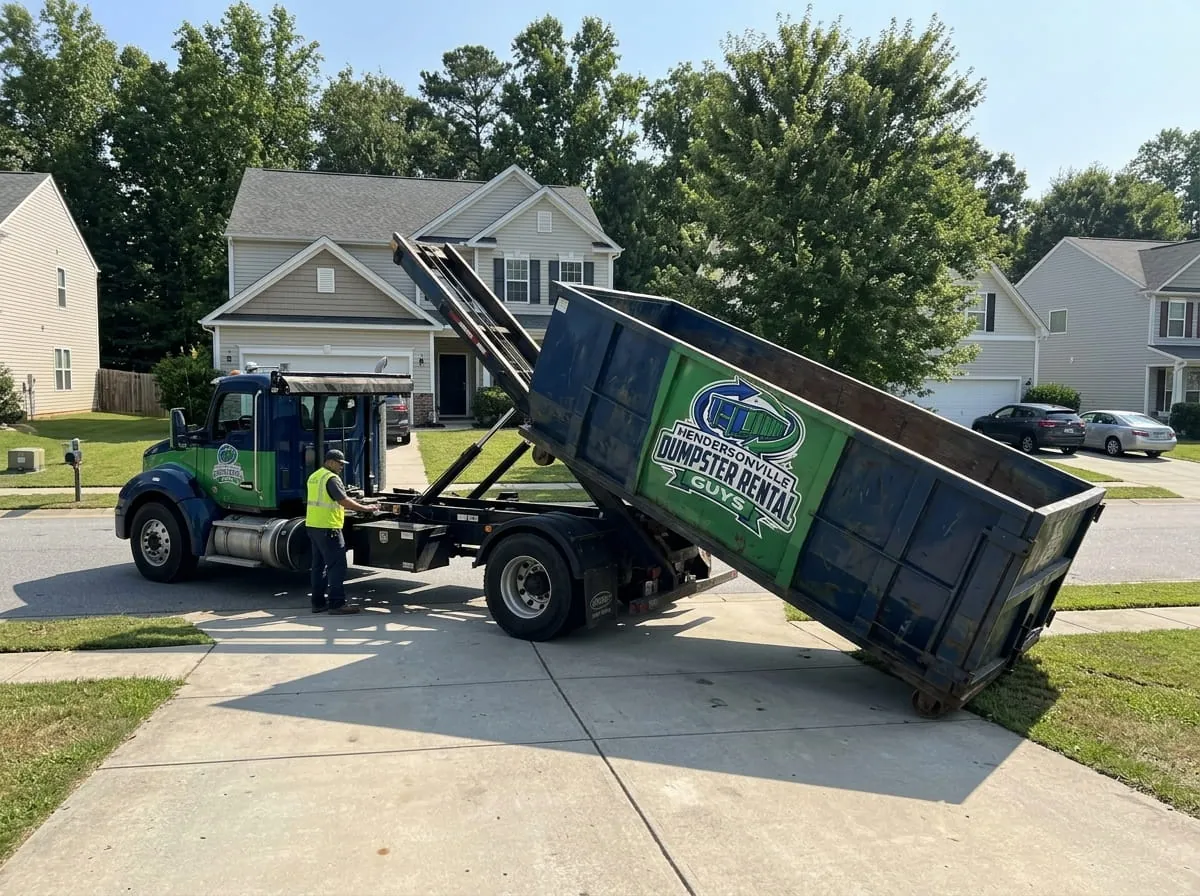
"What size dumpster do I need?" is the first question we get on just about every call here in Hendersonville, and it is the right one to ask. Order a bin that is too small and you are paying for a second haul and a second delivery fee. Order one too big for a heavy load and you are hauling air while risking an overage charge you never saw coming. After years of dropping roll-offs on lakefront lots off Old Hickory Lake, in the older neighborhoods near downtown, and out in the newer Sumner County subdivisions, we have learned that matching the container to the job is mostly common sense once you understand how these bins actually work.
This guide walks through the four roll-off sizes we run most often, their real dimensions, what each one holds, and how weight limits and heavy debris change the math. No fluff, no upsell. Just what we would tell a neighbor.
The Four Roll-Off Sizes We Run
Roll-off dumpsters are measured in cubic yards, which describes the volume the box holds, not its footprint. A "yard" is a cubic yard, roughly the amount of material that fills a space three feet wide, three feet deep, and three feet tall. Picture that cube filled with debris and you have one yard. Here is how the common sizes stack up.
| Size | Typical Dimensions (L x W x H) | Holds (pickup truck loads) | Best For |
|---|---|---|---|
| 10-yard | 12-14 ft x 8 ft x 3.5 ft | 3-4 | Small cleanouts, heavy debris, single-room demo |
| 15-yard | 16 ft x 8 ft x 4 ft | 4-6 | Mid-size remodels, roof tear-offs, flooring |
| 20-yard | 22 ft x 8 ft x 4.5 ft | 6-8 | Large cleanouts, multi-room reno, deck removal |
| 30-yard | 22 ft x 8 ft x 6 ft | 9-12 | Whole-home renovation, new construction, big estate cleanouts |
Dimensions vary a little between manufacturers, but the footprint on the low end (10 and 15) is close to identical. The difference is wall height. A 10-yard bin has walls around three and a half feet tall, while a 30-yard bin stands about six feet. That matters when you are planning where it sits: all of these need a flat, firm spot roughly 60 feet long to account for the truck, and about 10 feet of overhead clearance for the arm to raise and lower the box. On a sloped lakeside driveway in the Middle Tennessee hills, that flat landing spot is often the real constraint, not the size itself. Call us and we will talk through placement before the truck rolls.
10-Yard: Small Footprint, Heavy Hitter
The 10-yard is our workhorse for heavy, dense material. Because it holds a modest volume, it is nearly impossible to fill past a safe weight with lighter debris, which makes it the correct and only sensible choice for concrete, brick, dirt, gravel, and asphalt shingles. We see a lot of brick ranch homes around Hendersonville, and when someone is tearing out an old brick patio or a cracked concrete driveway, this is the bin.
Typical 10-yard jobs: a single bathroom gut, a small bath or kitchen demo, a 250-square-foot deck or dock removal, a modest garage declutter, or any load that is mostly concrete, dirt, or roofing. It fits in a single parking space and tucks into tight lakeside driveways where a bigger box simply will not sit. Learn more on our 10-yard dumpster page.
15-Yard: The Sweet Spot for Mid-Size Jobs
The 15-yard splits the difference and is one of the most practical sizes for a Hendersonville homeowner. The extra foot of wall height over the 10-yard gives you meaningfully more room without jumping to a footprint you cannot park. It is our go-to recommendation for roof tear-offs on an average single-family home, because shingles are heavy and a 15 keeps you in a sensible weight range while still holding a full tear-off layer or two.
It also shines for flooring removal, a mid-size kitchen remodel, a large garage or shed cleanout, and the first serious pass at a basement. Many of our older homes near downtown have full basements, and clearing decades of accumulation usually lands right in this range. See the 15-yard dumpster details if this sounds like your project.
20-Yard: Big Volume, Still Manageable
The 20-yard is the most popular size for larger residential projects because it holds a lot of bulky, lighter material without the tall walls of a 30. The footprint is the same length as a 30-yard, but the lower height makes loading easier when you are lifting debris by hand over the side rather than walking it in.
Reach for a 20-yard on a multi-room renovation, a full-house carpet and furniture clearout, a large deck or above-ground pool removal, or a storm cleanup after one of our severe spring systems rolls through Sumner County. When a line of straight-line winds or a tornado warning tears limbs down across a lakefront lot, the volume of brush, fencing, and roofing adds up fast, and the 20 handles that mixed debris well. The 20-yard dumpster page has more.
30-Yard: The Whole-Project Container
The 30-yard is for big, bulky jobs where volume is the main concern and the debris is relatively light. Those six-foot walls hold a staggering amount of material, which makes this the right call for a whole-home renovation, a new construction build-out in one of the fast-growing subdivisions north of Nashville, a major estate or hoarding cleanout, or a full roof and siding project combined.
One honest caution: because the 30 holds so much, it is easy to overfill it with heavy material and blow past the weight allowance before the box ever looks full. Never put concrete, dirt, or a full shingle tear-off in a 30 unless we have specifically set it up for that. For big construction debris, our construction dumpster rental service pairs the right box with the right weight plan. Details on the 30-yard dumpster page.
Weight Limits and Overage Fees
This is the part that catches people off guard, so pay attention here. Every roll-off comes with a weight allowance included in the flat rate, usually expressed in tons. Go over that allowance and you pay an overage fee for each additional ton, billed at the landfill scale. The bin has a volume limit and a weight limit, and you hit whichever comes first.
With light, bulky debris like furniture, cardboard, drywall, and brush, you will almost always fill the box to the top before you ever approach the weight cap. With dense material, it is the opposite: a 10-yard bin can reach its weight limit when it is only a third full of concrete. That is exactly why heavy debris goes in small bins. Trying to save money by renting one big container for a concrete job is the single most common and most expensive mistake we see.
A few rules that keep you out of trouble:
- Load evenly and keep material below the top rail. Debris mounded over the fill line cannot be legally or safely hauled.
- Break down bulky items so you use the cubic footage you paid for instead of trapping air pockets.
- Keep heavy and light material in separate bins when you can. Mixing a little concrete into a big renovation load is a quiet way to trigger an overage.
- Ask us for the exact tonnage included before you book. We will tell you straight.
Heavy Debris: Why Small Bins Win
Concrete, brick, block, dirt, sod, gravel, asphalt, and roofing shingles are what we call heavy or "clean" debris, and they live in a different world from household junk. In the humid Middle Tennessee climate, soil holds moisture and gets heavier still, so that pile of dirt from regrading a lakeside yard weighs far more than it looks. For any load that is mostly this kind of material, a 10-yard, or sometimes a dedicated concrete bin, is the correct answer every time.
If your job is a roof tear-off, a driveway removal, a chimney teardown on an older downtown home, or a yard regrade, tell us the material up front. Many haulers require heavy debris to be kept separate and clean (no trash mixed in) so it can be recycled, and keeping it that way often lowers your disposal cost. Our roll-off rental team will spec the right box and weight plan for the specific material.
Matching the Size to Your Job
Here is the quick field guide we use when a Hendersonville homeowner describes their project:
- Single bathroom remodel: 10-yard. Fixtures, tile, and a vanity do not add up to much volume.
- Kitchen remodel: 10 to 15-yard, depending on whether you are keeping cabinets and flooring.
- Roof tear-off (average home): 15-yard. Shingles are heavy, so stay small and dense.
- Garage or basement cleanout: 15 to 20-yard. Full basements in our older homes trend toward the 20.
- Dock, boathouse, or deck removal: 10 to 20-yard depending on size and whether treated lumber is involved.
- Multi-room or whole-floor renovation: 20-yard.
- Storm and tornado cleanup: 20-yard for mixed brush, fencing, and roofing after a spring system.
- Whole-home gut renovation: 30-yard.
- New construction: 30-yard, often with scheduled swap-outs as the build progresses.
- Large estate cleanout: 20 to 30-yard based on how much is in the home.
When you are genuinely torn between two sizes for a household job (not a heavy load), go one size up. The price difference between adjacent sizes is almost always less than the cost of a second delivery and haul, and nobody has ever called us upset that their bin had a little room to spare. For a breakdown of local pricing, see our guide on dumpster rental cost in Hendersonville.
A Few Hendersonville-Specific Notes
Our terrain and housing stock shape these choices more than people expect. On the rolling hills and sloped driveways common around Old Hickory Lake, placement space often decides the size as much as volume does. Lakeside and lakefront lots frequently have gravel or soft shoulders, so we may lay down boards to protect your surface and keep the box stable. Older homes near downtown with mature trees and narrow drives sometimes do better with a 10 or 15 we can tuck in tight, even if a bigger box would hold the job, because a second small swap beats blocking your access for a week.
Before you fill anything, it is worth a quick look at our guide on what can and cannot go in a dumpster, since items like appliances with refrigerant, tires, paint, and certain electronics have to stay out. For routine home projects, our residential dumpster rental service covers everything from a weekend garage purge to a full basement clearout.
Still Not Sure? Just Ask.
You do not have to get this exactly right on your own. Describe your project to us (the rooms, the material, where the box will sit) and we will tell you the honest right size, the weight allowance, and the flat price before you commit. We would rather spend two minutes on the phone than see you pay for a second haul. Call Hendersonville Dumpster Rental Guys at (629) 300-5056 or request a quote online, and we will get the right roll-off on your driveway. Browse all of our services to see how we can help with your next project.

Owner, Hendersonville Dumpster Rental Guys — sharing straight advice from years of local hauling across Hendersonville and Sumner County.
Frequently Asked Questions
What size dumpster do I need for a bathroom or small kitchen remodel?
A 10-yard dumpster handles most single-bathroom gut jobs, and a 10 or 15-yard covers a typical kitchen remodel. Fixtures, tile, cabinets, and a vanity do not add up to much volume, so there is rarely a need to go larger unless you are also tearing out flooring throughout the house.
Why do I have to put concrete and shingles in a small dumpster?
Heavy debris like concrete, brick, dirt, and asphalt shingles hits the weight limit long before it fills the box. A 10-yard bin can reach its tonnage cap when it is only about a third full of concrete. Renting a big container for heavy material is the most common way people trigger expensive overage fees, so clean heavy loads always go in a 10-yard.
What does the weight limit mean and how do overage fees work?
Every rental includes a set weight allowance, usually in tons, as part of the flat rate. If the loaded bin weighs more than that at the landfill scale, you pay an overage fee per additional ton. You hit either the volume limit or the weight limit, whichever comes first, so ask us for the exact tonnage included before you book.
What size dumpster is best for cleaning up after a spring storm or tornado?
A 20-yard dumpster is usually the right call for storm cleanup in Sumner County. Mixed debris like downed limbs, brush, fencing, and torn roofing is bulky but relatively light, so the 20-yard gives you plenty of volume with walls low enough to load limbs over the side easily.
Can a dumpster fit on my sloped lakeside driveway?
Usually yes, but placement matters more than size on our hilly lakefront lots. We need a flat, firm spot roughly 60 feet long for the truck and about 10 feet of overhead clearance. On gravel or soft shoulders we lay down boards to protect your surface. Call us before delivery and we will confirm the best spot for your lot.