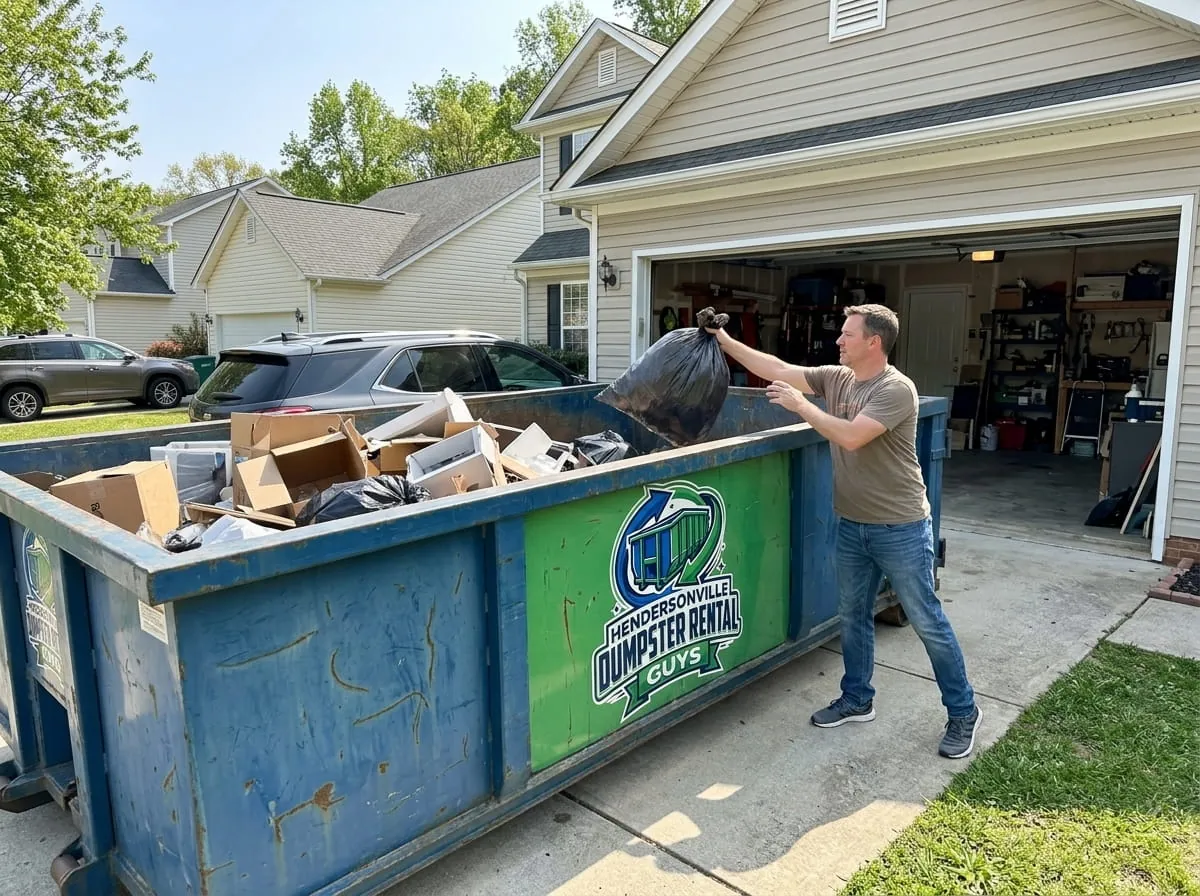
Renting a dumpster feels simple until you are standing in the driveway with an old recliner in one hand and a can of half-used deck stain in the other, wondering which one is actually allowed in the container. At Hendersonville Dumpster Rental Guys, this is the question our Sumner County neighbors ask more than any other, so we put together a straight-talking guide to what belongs in a roll-off, what has to stay out, and why Tennessee draws those lines. Knowing the difference before your haul-away day keeps your project moving, protects you from surprise fees, and keeps dangerous material out of our local landfills.
Why There Are Rules About What Goes in a Dumpster
The restrictions are not arbitrary. Tennessee landfills are regulated by the Tennessee Department of Environment and Conservation (TDEC), and the Class I and Class III landfills that serve the Hendersonville and Sumner County area are only permitted to accept certain waste streams. When banned material slips into a load, it can contaminate groundwater, release toxic gas, catch fire, or damage the equipment that compacts and moves the trash. Because the hauler, the transfer station, and the landfill are all liable for what crosses the scale, those prohibited items are screened out at every stage. If a container arrives with hazardous or banned waste mixed in, the whole load can be rejected or hit with a special handling charge that gets passed back to you.
There is a second reason, too: weight. Every roll-off dumpster is rated for a specific tonnage, and the trucks and roads have legal limits. Dense materials like concrete and dirt can max out the weight allowance in a container that still looks half empty, which is why those materials follow their own set of rules. Understanding both the safety limits and the weight limits is the key to a smooth rental.
What You Can Put in a Dumpster
The good news is that the overwhelming majority of what comes out of a home cleanout, remodel, or demolition is perfectly welcome. Here is what we happily take in a standard roll-off for most residential dumpster rental jobs around Hendersonville.
Household Junk and Furniture
General household clutter is the bread and butter of dumpster rental. Clothing, toys, boxes, books, kitchenware, broken furniture, carpet and rugs, non-electronic decor, and the random accumulation of a garage or attic cleanout all go straight in. Couches, dressers, tables, chairs, and bed frames are fine as well. If you are clearing out an estate or downsizing and the volume feels overwhelming, our junk removal crew can handle the loading for you.
Construction and Demolition Debris
Remodeling and demo projects produce a lot of heavy, bulky waste, and a roll-off is built for exactly this. Drywall, lumber, plywood, trim, cabinetry, countertops (non-stone), subfloor, insulation, siding, fencing, window and door frames, and general building scrap are all accepted. Brick, block, and concrete are accepted too, but they are weight-sensitive and usually need a dedicated container, which we cover below.
Yard and Storm Debris
Middle Tennessee gets its share of severe weather, and when a line of storms rolls through Sumner County it leaves behind downed limbs, split trunks, and piles of brush. Branches, logs, leaves, grass clippings, shrubs, root balls, and general landscaping waste are all dumpster-friendly. For recurring landscape cleanups, our yard waste removal service keeps the green waste separated so more of it can be composted or mulched rather than buried.
Roofing and Flooring
Tearing off an old roof? Asphalt shingles, roofing felt, and flashing are accepted, though shingles are dense and will pull your weight up quickly, so a roofing project almost always needs its own container sized for the job. Flooring tear-outs are welcome as well: hardwood, laminate, vinyl, tile, and carpet with padding all go in without a problem.
Accepted in a standard dumpster:
- Household junk, clutter, and non-hazardous cleanout waste
- Furniture, cabinetry, and countertops (laminate or wood)
- Construction and demolition debris (drywall, lumber, siding, trim)
- Roofing materials such as asphalt shingles and felt
- Flooring: hardwood, laminate, vinyl, tile, and carpet
- Yard and storm debris: branches, brush, leaves, and shrubs
- Concrete, brick, block, and dirt (in a dedicated, weight-rated container)
What You Can't Put in a Dumpster
Now the other side of the ledger. These items are banned or restricted not because we want to make your life harder, but because TDEC regulations, landfill permits, and basic safety do not allow them in with regular municipal waste. Keeping them out is the law.
Hazardous Waste, Paint, and Chemicals
Anything flammable, corrosive, reactive, or toxic is strictly prohibited. That means motor oil, gasoline, antifreeze, solvents, pesticides, herbicides, pool chemicals, cleaning acids, and medical or biohazard waste. Liquid paint is also banned because it can leach into the ground and because it coats and contaminates everything else in the load. These materials require special handling at a licensed facility, where they are neutralized or processed safely instead of being buried where they can reach the water table.
Tires, Batteries, and Propane Tanks
Tires are banned from Tennessee landfills statewide because they trap methane, float back to the surface, and create voids that collapse. Lead-acid car batteries and rechargeable batteries contain heavy metals and acids and are both recyclable and regulated. Propane tanks, aerosol cans, and any pressurized or sealed vessel are prohibited outright because they can explode when crushed or exposed to heat in a truck or at the landfill face.
Appliances, Electronics, and Mattresses
Refrigerators, freezers, air conditioners, and dehumidifiers contain Freon and other refrigerants that must be professionally recovered under federal law before the unit can be scrapped, so appliances with these coolants cannot simply be tossed. Electronics such as TVs, monitors, computers, and printers (e-waste) contain lead, mercury, and other toxins and are banned from the trash as well. Mattresses and box springs are technically landfill-bound in many cases but are notoriously hard to compact and are often subject to an added disposal fee, so always ask before you load one.
Prohibited or restricted (keep these out):
- Hazardous waste, chemicals, solvents, pesticides, and pool chemicals
- Wet paint, stains, motor oil, gasoline, and antifreeze
- Tires (banned from TN landfills)
- Car, lithium, and rechargeable batteries
- Appliances containing Freon (fridges, freezers, AC units)
- Electronics and e-waste (TVs, monitors, computers)
- Propane tanks, aerosol cans, and pressurized containers
- Mattresses and box springs (accepted sometimes, usually with a fee)
- Medical, biohazard, and asbestos-containing waste
Weight-Sensitive Materials: Concrete, Dirt, and Brick
Concrete, asphalt, brick, block, stone, dirt, gravel, and sod are all accepted at the landfill, but they are so heavy that they follow special rules. A roll-off filled with concrete can weigh several times what the same box of household junk would weigh, blowing past the container's tonnage rating and the truck's legal road weight. For that reason we provide a separate, smaller container specifically for heavy inert materials and keep them out of mixed-debris loads. If your project involves a demolished patio, a removed driveway, or a lot of excavated soil, tell us up front so we can size the container correctly and quote you accurately. Clean concrete and brick can also be recycled into aggregate, which is often cheaper and greener than landfilling it.
How to Dispose of Banned Items in Hendersonville and Sumner County
Banned does not mean stuck. Sumner County gives residents several good options for the material that cannot go in a dumpster. The table below is a quick reference for the most common prohibited items.
| Item | Where it should go |
|---|---|
| Paint, chemicals, pesticides | Household Hazardous Waste collection events and permanent drop-off sites in the Nashville/Sumner region |
| Tires | County convenience centers that accept tires, often with a per-tire fee |
| Car and household batteries | Auto parts stores and retailers that offer battery recycling and core returns |
| Electronics / e-waste | County e-waste recycling drop-off events and participating retailers |
| Appliances with Freon | A scrap or appliance recycler that performs certified refrigerant recovery |
| Latex paint (dried) | Dried out with hardener or kitty litter, the hardened solids can go in regular trash |
For a deeper look at local drop-off locations and recycling programs, see our guide to recycling and waste disposal in Hendersonville. If your project is heavy on building materials, our breakdown of how to dispose of construction debris walks through sorting, recycling, and container sizing in more detail.
When in Doubt, Just Ask
The simplest rule of all: if you are not sure whether something belongs in the dumpster, ask before you load it. A thirty-second phone call is a lot cheaper than a rejected load or a contamination fee, and our team knows exactly what the local landfills will and won't take. We would rather tell you "set that one aside" up front than surprise you on pickup day. We can also recommend the right container size so you are not paying for space you don't need or running out of room halfway through.
Ready to clear out the clutter the right way? Call Hendersonville Dumpster Rental Guys at (629) 300-5056 for honest advice and a fast quote, or reach us through our contact page. We will help you get the right dumpster, keep the banned stuff out, and get your Hendersonville project done without the headaches.
Owner, Hendersonville Dumpster Rental Guys — sharing straight advice from years of local hauling across Hendersonville and Sumner County.
Frequently Asked Questions
Can I put a mattress in a dumpster in Hendersonville?
Sometimes, but not always, and usually not for free. Mattresses and box springs are hard to compact and many facilities charge an added disposal fee or ask that they be handled separately. Always tell us you have a mattress when you book so we can confirm whether it can go in your container and what, if anything, it adds to the cost.
Why can't I throw paint or chemicals in the dumpster?
Liquid paint, solvents, pesticides, and other chemicals are classified as household hazardous waste and are banned from Tennessee landfills under TDEC rules. They can leach into groundwater and contaminate the rest of the load. Take them to a Household Hazardous Waste collection event or drop-off site. Latex paint that has been fully dried out with hardener or kitty litter can usually go in the regular trash.
Are appliances like refrigerators allowed in a roll-off dumpster?
Appliances that contain Freon or other refrigerants, such as refrigerators, freezers, and air conditioners, cannot go in a standard dumpster because federal law requires the refrigerant to be professionally recovered first. Take these to a scrap or appliance recycler that performs certified refrigerant recovery. Appliances without refrigerants, like a dryer or a stove, are easier to handle, so ask us about your specific unit.
What happens if banned items end up in my dumpster anyway?
If prohibited material is found when the container reaches the transfer station or landfill, the load can be rejected or charged a special handling fee, and that cost gets passed back to you. To avoid it, keep hazardous waste, tires, batteries, electronics, and Freon appliances out, and call us if you are unsure about any item before loading it.
Can I fill a dumpster with concrete, dirt, or brick?
Yes, but heavy inert materials like concrete, brick, block, dirt, and gravel are weight-sensitive and need a dedicated, weight-rated container rather than being mixed with regular debris. A full box of concrete easily exceeds tonnage and road-weight limits. Let us know up front if your project includes these materials so we can size the right container and quote you accurately.