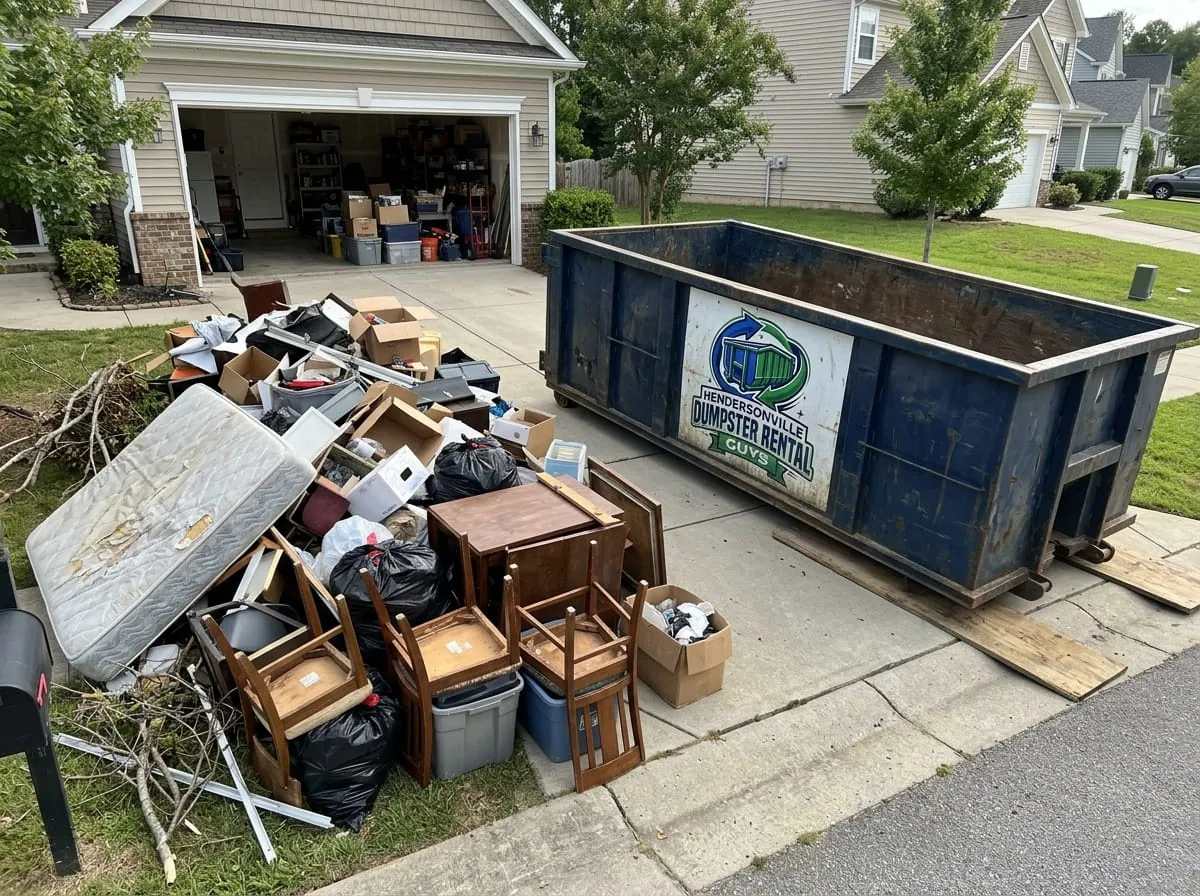
Whether you are upsizing into a new subdivision off Saundersville Road, finally tackling the garage of a longtime home near downtown Hendersonville, or clearing out a lakeside place on Old Hickory Lake, a full-house cleanout feels huge until you break it into rooms. This room-by-room checklist gives you a working order, a simple keep-donate-toss system, and the right dumpster size so you only rent once. Take it one space at a time and you will be amazed how fast a packed house empties out.
Start with a plan, not a pile
Before you touch a single closet, set up three zones you will use in every room: Keep, Donate, and Toss. Grab contractor bags for trash, sturdy boxes for donations, and painter's tape or sticky notes to label everything. Work top to bottom and back to front in each room so you are never re-handling the same items twice.
Sequencing matters. Start with the hardest storage areas while your energy is high, and finish with the easy living spaces. A smart order for a Hendersonville home is: garage, basement, attic, then bedrooms, bathrooms, kitchen, living room, and finally the porch and yard. The big storage spaces produce the most volume, so having a dumpster on site from day one keeps your momentum going and stops items from drifting into a new pile.
Set a realistic pace, too. A single room with closets can take an afternoon, while a packed garage or basement can eat a full day on its own. Most families find a long weekend handles an average home, and a week is kinder for a lakeside property with a boathouse and years of storage. Block out the time on the calendar, line up a helper or two, and keep water and snacks close so nobody burns out halfway through a room.
Kitchen
Kitchens hide more than any room their size. Pull everything out of the cabinets and pantry onto the counters so you can actually see what you own.
- Keep: daily dishes, working small appliances, good cookware, and unexpired pantry staples.
- Donate: duplicate gadgets, extra sets of dishes, and unused small appliances that still run.
- Toss: expired food, warped plastic containers, chipped dishes, dead appliances, and that drawer full of mystery cords.
Check expiration dates ruthlessly and wipe down each shelf as you empty it. Boxed pantry goods that are still sealed and in date can go to a local food pantry rather than the dumpster.
Living room and dining room
These rooms are mostly furniture and media. Decide early what furniture is staying with the house and what is leaving with you.
- Keep: furniture that fits your next space, framed photos, and books you will truly re-read.
- Donate: gently used sofas and chairs, end tables, DVDs, and board games.
- Toss: broken electronics, cracked lamps, and water-stained or torn upholstery.
Old TVs, stereos, and tangled cables count as e-waste and should not go in a standard dumpster. Set them aside for a separate electronics drop-off.
Bedrooms and closets
Closets are where cleanouts stall, so give yourself a rule: if you have not worn it or used it in a year, it goes. Do one closet at a time and the decisions get easier.
- Keep: clothes that fit and get worn, and seasonal gear you actually use.
- Donate: clean clothing, shoes, handbags, and linens in good shape.
- Toss: stained or ripped clothing, single socks, worn-out shoes, and lumpy pillows.
Mattresses are bulky but dumpster-friendly in most cases. If a mattress is still clean and intact, a charity may take it; if it is sagging or stained, it is a toss.
Bathrooms
Bathrooms go fast and feel great when finished. Clear the cabinet under the sink and the medicine cabinet first.
- Keep: current medications, unopened toiletries, and good towels.
- Donate: unopened, unexpired toiletries and extra new towels.
- Toss: old makeup, worn towels, and empty bottles. Take expired medications to a pharmacy take-back rather than the trash.
Basement
Hendersonville's humid summers are hard on anything stored in a basement. Expect to find musty boxes, and inspect for mold before you decide to keep. Cardboard, fabric, and paper that have gone damp and musty are almost never worth saving.
- Keep: items in sealed plastic bins that are clean and dry inside.
- Donate: working tools, exercise equipment, and furniture that smell fresh and show no mold.
- Toss: water-damaged boxes, mildewed books, rusted metal, and anything with a musty smell you cannot wash out.
Wear a mask and gloves when handling long-stored items, and open windows for airflow. Mold spreads, so when in doubt, throw it out. Finished basements that doubled as a playroom or home gym can hold surprising volume, from old sectional couches to treadmills nobody uses, so plan for these heavy pieces when you estimate your dumpster size.
Garage
In the Nashville metro, garages become overflow storage the day you move in. This is usually the single biggest source of dumpster volume in a full-house cleanout.
- Keep: the tools and lawn gear you use, labeled and shelved so you can find them.
- Donate: extra hand tools, sporting goods, and bikes the kids outgrew.
- Toss: broken power tools, dried-out paint, cracked storage totes, scrap lumber, and old tires (check for a tire recycler, as many landfills restrict them).
Set hazardous items aside: paint, solvents, pesticides, and automotive fluids do not belong in a dumpster. Sumner County has household hazardous waste options for those.
Attic and storage
Attics hold holiday decorations, old furniture, and boxes nobody has opened in a decade. Heat and humidity take a toll up there too.
- Keep: genuine keepsakes and documents, stored in sealed bins.
- Donate: decorations and furniture that are still in good condition.
- Toss: brittle plastic decor, broken frames, degraded foam furniture, and old insulation scraps.
Pass boxes down to a staging area rather than sorting in a cramped, hot attic. You will sort faster and much more safely on the ground floor.
Porch, yard, and boathouse
Lakeside homes on Old Hickory Lake add an extra zone: the boathouse or dock storage, often packed with life jackets, ropes, and lake toys.
- Keep: working outdoor furniture, grills, and lake gear in good shape.
- Donate: extra patio pieces and usable sporting goods.
- Toss: rusted furniture, torn canopies, broken planters, rotted dock lumber, and cracked coolers.
Sort as you go, not at the end
The biggest mistake in a cleanout is making a giant maybe pile and promising to deal with it later. Later never comes, and you end up handling the same objects three and four times. Instead, make a decision the moment you pick something up: keep it, donate it, or toss it. If a single item honestly stumps you, give it a thirty-second rule, and if you still cannot commit, it almost always means you can let it go.
Loading the dumpster as you fill each box keeps your workspace clear and your head clear, too. An empty room is powerful motivation, and seeing one space finished makes the next one feel possible. Keep a small keepsake box going the whole time for the few truly meaningful things, so sentiment does not stall your progress in every room.
Quick keep, donate, or toss guide
| Donate it | Toss it |
|---|---|
| Clean, working furniture | Water-damaged or broken furniture |
| Clothing and linens in good shape | Stained, torn, or mildewed fabric |
| Working appliances and tools | Dead appliances and broken tools |
| Sealed, in-date household goods | Expired food and toiletries |
What size dumpster for a full-house cleanout
The right size depends on how much is leaving and how big the house is. For most whole-home cleanouts in Hendersonville, a 20-yard dumpster is the sweet spot: large enough for furniture and years of accumulation, but still fits in a standard driveway. Here is a quick guide.
| Dumpster size | Best for |
|---|---|
| 10-yard | One or two rooms, a single closet or garage purge |
| 15-yard | A small home or a heavy single-room cleanout |
| 20-yard | A typical full-house cleanout, garage plus basement |
| 30-yard | A large lakeside home or an estate-level clear-out |
Not sure which to pick? Our dumpster size guide walks through it, and the 20-yard dumpster page covers the most popular choice for a full-house project.
Heavy furniture and appliances
Big items are where a cleanout gets physical. A few tips to save your back and your schedule:
- Disassemble bed frames, tables, and shelving before loading so they lie flat and save space in the dumpster.
- Keep a clear path from the house to the dumpster and load heavy pieces first, along the bottom.
- Refrigerators, freezers, and air conditioners contain refrigerant and usually need special handling, so ask before tossing them.
- If the lifting is more than your crew can manage, our junk removal team can haul the heavy items for you.
For a cleanout tied to settling a loved one's home, build in extra steps for sorting valuables and paperwork before anything leaves the house, and keep a small keepsake box going throughout the project.
Where to donate in Sumner County
Keeping usable items out of the landfill is easier here than you might think. Several local organizations will take gently used goods:
- Goodwill of Middle Tennessee accepts clothing, household items, and electronics at its area donation centers.
- The Salvation Army takes furniture, clothing, and housewares, and often offers pickup for large items.
- Habitat for Humanity of Sumner County ReStore welcomes furniture, appliances, building materials, and home goods, with proceeds funding local homes.
Call ahead to confirm what each location accepts and whether they offer pickup. Whatever does not qualify for donation goes in the dumpster, so you handle every item exactly once.
Ready to clear it out?
A clean, empty house starts with the right dumpster in the driveway before you begin. Hendersonville Dumpster Rental Guys makes it simple: we deliver the size you need, you fill it on your schedule, and we haul it away. Request a quote online or call (629) 300-5056 to book your full-house cleanout dumpster today, and turn that packed Sumner County home back into open space.
Owner, Hendersonville Dumpster Rental Guys — sharing straight advice from years of local hauling across Hendersonville and Sumner County.
Frequently Asked Questions
What is the best order to work through a full-house cleanout?
Start with the hardest, highest-volume storage spaces while your energy is up, then finish with the easier living areas. A smart order for a Hendersonville home is garage, basement, attic, then bedrooms, bathrooms, kitchen, living room, and finally the porch, yard, and boathouse. Having a dumpster on site from day one keeps the momentum going so items do not pile up again.
What size dumpster do I need for a whole-home cleanout?
For most full-house cleanouts in Hendersonville, a 20-yard dumpster is the sweet spot: it holds furniture and years of accumulation yet still fits a standard driveway. A 10 or 15-yard works for one or two rooms or a garage purge, while a large lakeside home or estate-level clear-out may call for a 30-yard.
How do I handle items stored in a humid basement or attic?
Hendersonville summers are hard on stored items, so inspect for mold before deciding to keep anything. Items sealed in clean, dry plastic bins are usually fine, but damp cardboard, mildewed books, and musty fabric are almost never worth saving. Wear a mask and gloves, open windows for airflow, and when in doubt, throw it out, because mold spreads.
Where can I donate usable items in Sumner County?
Goodwill of Middle Tennessee takes clothing, household goods, and electronics; the Salvation Army accepts furniture, clothing, and housewares, often with pickup for large items; and the Habitat for Humanity of Sumner County ReStore welcomes furniture, appliances, building materials, and home goods. Call ahead to confirm what each location accepts and whether they offer pickup.
Can I put furniture and appliances in the dumpster?
Most furniture and mattresses can go in a dumpster, and disassembling frames and tables helps them lie flat to save space. Refrigerators, freezers, and air conditioners contain refrigerant and usually need special handling, so ask first. Paint, solvents, pesticides, automotive fluids, and electronics are not allowed and should go to hazardous waste or e-waste drop-off. If the lifting is too much, our junk removal team can help.